


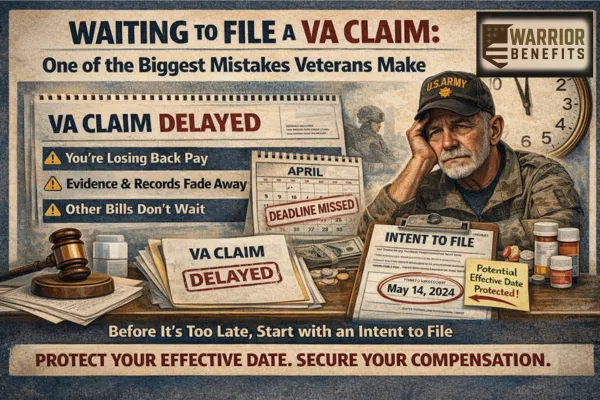
Why Waiting to File a VA Claim Is One of the Biggest Mistakes Veterans Make
Waiting Feels Safe — But It’s Often the Most Expensive Choice
One of the most common things veterans tell us is:
“I just wanted to wait until I had everything ready.”
That instinct makes sense. Veterans want to do things right. They don’t want to rush. They don’t want to waste anyone’s time — especially their own.
But when it comes to VA disability claims, waiting is rarely neutral. More often than not, it’s costly.
At Warrior Benefits, we regularly see veterans who qualify for benefits but lost months or even years of compensation simply because they waited to start the process.
The VA Does Not Backdate Claims Based on Need or Fairness
The VA system does not ask:
How long you’ve been suffering
How severe your condition feels
How long you waited because you were unsure
Instead, it asks one question:
When did you formally file?
VA compensation is paid based on the effective date of your claim — not when symptoms began, not when you were diagnosed, and not when you realized you should file.
Once time passes without action, it’s usually gone forever.
The Myth of the “Perfect Claim”
Many veterans delay filing because they want:
Every medical record
Every diagnosis finalized
Every appointment completed
Every symptom fully documented
The problem? There is no such thing as a perfect claim.
There is only:
A protected timeline
Or a lost one
The VA gives veterans a tool to protect time while they prepare — but many veterans don’t know it exists.
Intent to File: The Step Veterans Skip — and Regret
An Intent to File tells the VA:
“I plan to file a claim, but I need time.”
This single step:
Locks in a potential effective date
Gives you up to one full year to gather evidence
Requires no medical records upfront
Veterans who skip this step often lose a year of back pay — even when their claim is eventually approved.
Waiting without protecting your timeline is one of the most common and expensive mistakes we see.
Why Veterans Wait (And Why It’s Understandable)
Veterans delay filing for many valid reasons:
1. “I Don’t Know If I Qualify”
Uncertainty keeps veterans stuck. Many assume they’ll file once someone confirms eligibility — but eligibility is often determined after filing, not before.
2. “I Want to Avoid the VA Stress”
The VA process can feel overwhelming. Avoidance feels easier — until the consequences show up later.
3. “Others Have It Worse”
Many veterans minimize their own struggles out of comparison. But VA compensation is not a competition — it’s an acknowledgment of service-connected impact.
4. “I’ll Deal With It Later”
Life gets busy. Symptoms become “normal.” Years pass faster than expected.
Waiting Can Actually Make Claims Harder
Delaying doesn’t just cost time — it can weaken claims.
Over time:
Records get harder to find
Providers change
Memories fade
Symptoms become harder to describe clearly
Nexus connections become more difficult to document
Early action preserves evidence, not just pay.
Timing Affects More Than Money
When veterans delay filing, they often delay:
Access to VA healthcare
Eligibility for dependent benefits
Mental health support
Financial stability during worsening conditions
Benefits are designed to support veterans while conditions progress — not only after they become unmanageable.
You Don’t Have to File Everything at Once
Another misconception is that veterans must file all conditions together or not file at all.
In reality:
You can protect your date now
File strategically over time
Add conditions later
Strengthen evidence gradually
Smart timing is not rushing. It’s planning.
What “Early Action” Actually Looks Like
Early action doesn’t mean flooding the VA with paperwork.
It means:
Filing an Intent to File
Understanding which conditions matter most
Gathering targeted evidence
Avoiding unnecessary delays
Keeping control of your timeline
Veterans who do this tend to experience:
Less stress
Fewer regrets
Better long-term outcomes
Waiting Often Leads to One Painful Sentence
One of the hardest moments we see is when a veteran learns:
“You qualify — but we can’t recover the time you lost.”
The VA can approve claims.
It cannot rewind the clock.
Final Thoughts: Waiting Is a Decision — Even If It Doesn’t Feel Like One
Not filing is still a choice.
Waiting is still a decision.
And in the VA system, time is one of the most valuable assets you have.
You don’t need to rush your claim — but you do need to protect your timeline.
Don’t Lose Another Month to Uncertainty
Protect your effective date before you do anything else.
Contact Warrior Benefits to understand your options, file an Intent to File, and build a claim strategy that works on your timeline.
You earned the benefits. Don’t let waiting cost you them.