

What the VA Really Needs to Approve a Disability Claim (And What It Doesn’t)
Why So Many VA Claims Fail Before They Should
Every year, thousands of veterans file VA disability claims that should be approved—but aren’t. Not because the veteran didn’t serve. Not because the condition isn’t real. And not because the veteran didn’t “try hard enough.”
Most denials happen for one simple reason: the VA didn’t get what it legally needs to say yes.
The VA disability system isn’t based on effort, fairness, or how much a condition affects you emotionally. It is based on specific legal and medical requirements. Once you understand those requirements, the process becomes far less mysterious—and far more manageable.
At Warrior Benefits, this is one of the first conversations we have with veterans, because clarity at this stage prevents months (or years) of frustration later.
The VA Is Bureaucratic—Not Random
It’s easy to believe the VA operates randomly. Veterans swap stories about wildly different outcomes, long delays, and confusing decisions. While the system is slow and imperfect, it is surprisingly consistent in how it evaluates claims.
The VA follows a checklist. If the checklist isn’t satisfied, the claim is denied—even if the veteran absolutely deserves compensation.
Understanding that checklist is the key.
The Three Things Every VA Claim Must Have
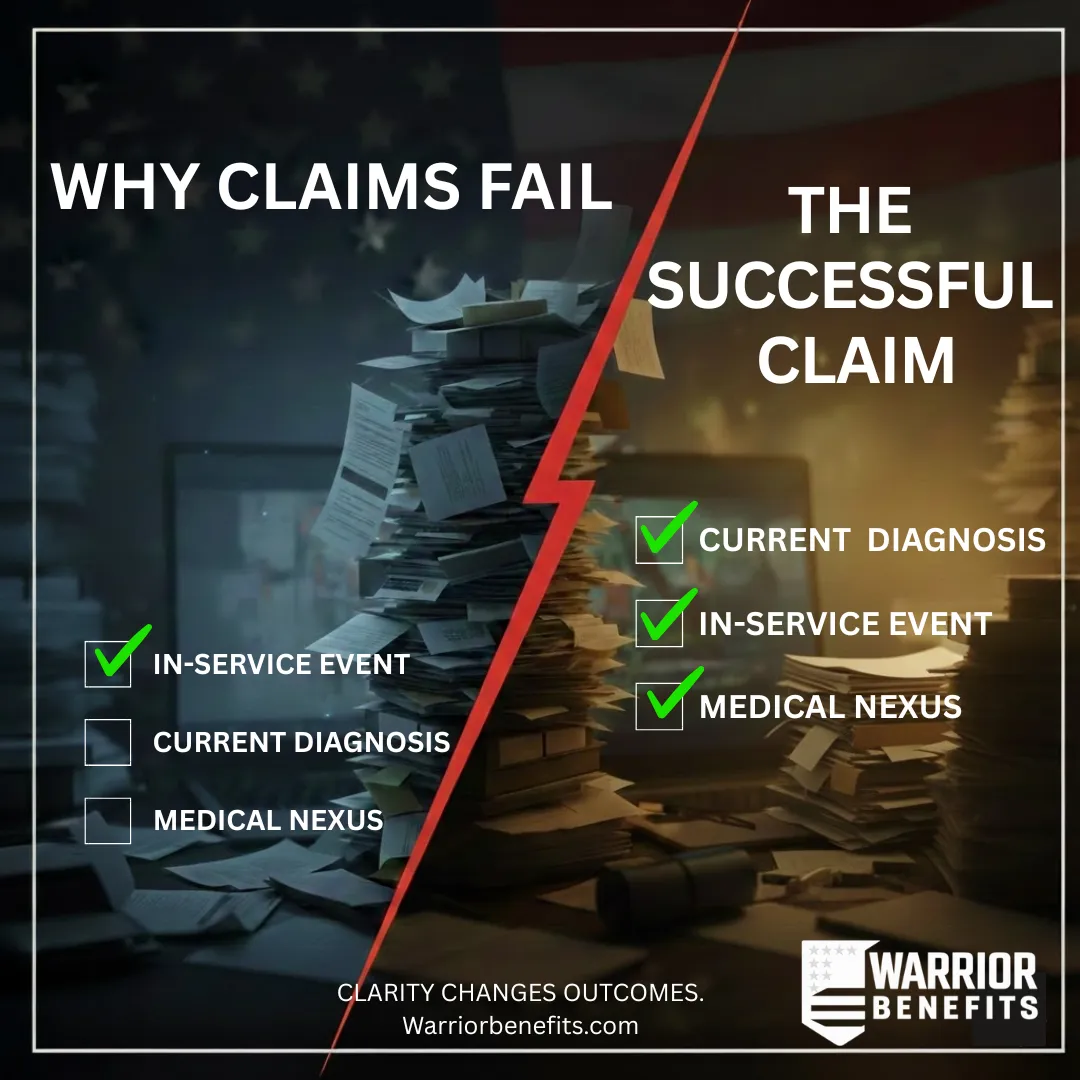
For the VA to approve any disability claim, three elements must be present:
A current diagnosis
An in-service event, injury, illness, or exposure
A medical connection (nexus) between the two
If even one of these is missing—or poorly explained—the VA’s hands are legally tied.
Let’s break each one down in plain English.
1. A Current Diagnosis: More Than “I Have Symptoms”
The VA does not compensate symptoms alone. It compensates diagnosed conditions.
A current diagnosis means:
A recognized medical condition
Identified by a qualified medical professional
Documented in medical records
This diagnosis does not have to come from a VA provider. Private doctors, specialists, and licensed clinicians all count. What matters is clarity and credibility.
Common Mistake: Confusing Treatment Notes With Diagnoses
Many veterans assume that because they’ve been treated for pain, anxiety, or sleep problems, they automatically have a diagnosis. Unfortunately, treatment notes often describe symptoms without formally diagnosing a condition.
If the diagnosis isn’t clearly stated, the VA may act as if it doesn’t exist.
2. The In-Service Event: What Happened (Not When It Was Diagnosed)
This is where many veterans incorrectly disqualify themselves.
An in-service event can include:
A documented injury
Repetitive physical strain
Psychological trauma
Toxic or environmental exposure
Duties related to your MOS
Deployment conditions
The VA does not require the condition to be diagnosed during service. Many conditions:
Take years to develop
Were ignored due to mission demands
Were misunderstood at the time
What matters is that something happened during service that could reasonably cause or worsen the condition.
Evidence That Can Support an In-Service Event
Service treatment records (when available)
Personnel or deployment records
Unit history
Lay statements describing what occurred
Consistent post-service history
Perfect records are not required. Credible, consistent evidence is.
3. The Nexus: Where Most Claims Break Down
The nexus is the medical explanation that connects your current diagnosis to your military service.
This is the most misunderstood—and most critical—part of a VA claim.
In simple terms, the VA must be able to say:
“It is at least as likely as not that this condition is related to military service.”
Without that connection, the VA cannot legally approve compensation—even if the diagnosis and service history are clear.
Why Veterans Struggle With the Nexus
They assume the connection is obvious
They expect the VA to “connect the dots”
They rely on records without explanations
The VA does not infer relationships. If the connection isn’t clearly explained, it often doesn’t exist in the VA’s eyes.
What the VA Does Not Need (Despite Popular Belief)
Many veterans waste time and energy worrying about things that rarely help—and sometimes hurt—their claim.
Here’s what the VA does not require:
❌ A Diagnosis During Service
Many legitimate claims are approved decades after discharge.
❌ Perfect Medical Records
Gaps are common, especially in combat or deployment settings.
❌ Mountains of Paperwork
Submitting hundreds of pages without explanation often slows claims down.
❌ Dramatic or Emotional Language
The VA evaluates function and medical probability—not intensity of storytelling.
❌ “Toughness”
Minimizing symptoms does not strengthen a claim. It weakens it.
Why “More Evidence” Is Not Always Better
Veterans are often told to submit everything. This well-meaning advice can backfire.
The VA needs:
Relevant evidence
Clearly explained connections
Consistency across records
Submitting large volumes of unrelated or repetitive documents can:
Bury critical evidence
Create inconsistencies
Delay review
Trigger unnecessary exams
Strong claims are focused, not flooded.
How the VA Evaluates the Evidence You Submit
When reviewing a claim, the VA asks:
Is the condition diagnosed?
Did something occur during service?
Is there a credible medical link?
Do the records tell a consistent story?
How does the condition affect function?
If the evidence answers these questions clearly, approval becomes far more likely.
Why So Many Veterans Get Denied the First Time
Most first-time denials happen because:
One of the three elements was missing
The nexus wasn’t clearly explained
Evidence was assumed, not shown
Symptoms were underreported
Claims were rushed without strategy
A denial does not always mean “you don’t qualify.” Often, it means the VA didn’t get what it needed.
How This Fits Into a Smart Claim Strategy
Understanding what the VA actually needs allows veterans to:
Avoid unnecessary delays
Focus on meaningful evidence
File stronger initial claims
Reduce appeals and rework
Protect effective dates
This is why education matters before filing—not after denial.
Final Thoughts: Clarity Changes Outcomes
The VA disability process feels overwhelming when the rules are unclear. Once the requirements are understood, the process becomes more navigable—even if it’s still slow.
Veterans don’t fail claims because they lack merit. They fail because the system requires precision—and no one explains that upfront.
That’s where informed guidance makes all the difference.
Build Your Claim the Right Way From the Start
Stop guessing what the VA wants.
Contact Warrior Benefits to understand exactly what evidence your claim needs—and how to avoid the most common reasons veterans are denied.
Strong claims aren’t louder. They’re clearer.