


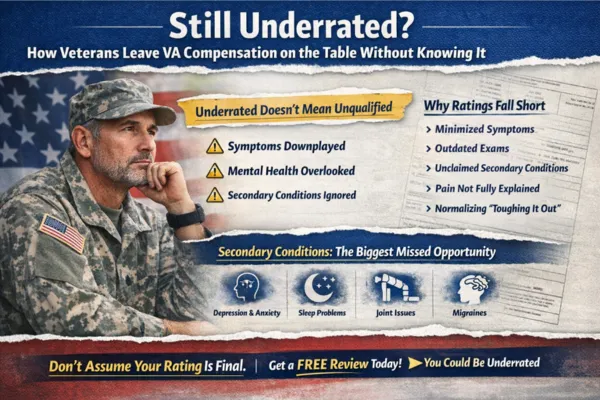
Still Underrated? How Veterans Leave VA Compensation on the Table Without Knowing It
Underrated Doesn’t Mean Unqualified
Being underrated is far more common than most veterans realize. Many veterans receive some compensation and assume it reflects the full picture. In reality, ratings often miss the daily impact of service-connected conditions.
The VA rates conditions using strict criteria. If symptoms aren’t documented or explained in the right way, the rating may fall short—even if the condition is legitimate.
Why Ratings Commonly Fall Short
Veterans are often underrated because:
Symptoms are minimized during exams
Pain is normalized instead of described
Mental health impacts are underreported
Secondary conditions are never claimed
Exams are outdated
Veterans are trained to endure. Unfortunately, that mindset can work against you during VA evaluations.
Secondary Conditions: The Biggest Missed Opportunity
Secondary conditions develop because of existing service-connected disabilities. Common examples include:
Depression or anxiety caused by chronic pain
Sleep issues linked to PTSD
Joint damage from altered gait
Migraines associated with mental health conditions
These conditions are often overlooked, even though they may qualify for compensation.
When a Rating No Longer Matches Reality
Your VA rating should reflect how your condition affects:
Work performance
Sleep
Mobility
Concentration
Relationships
If your daily life is more impacted now than when you were first rated, your rating may no longer be accurate.
Pride Can Be Expensive
Many veterans delay filing for increases because they don’t want to feel like they’re complaining. But VA benefits are not charity. They are earned.
Correcting a rating is not asking for special treatment—it’s correcting incomplete information.
Don’t assume your rating is final.
Have Warrior Benefits review your benefits and help determine whether you may be underrated.