


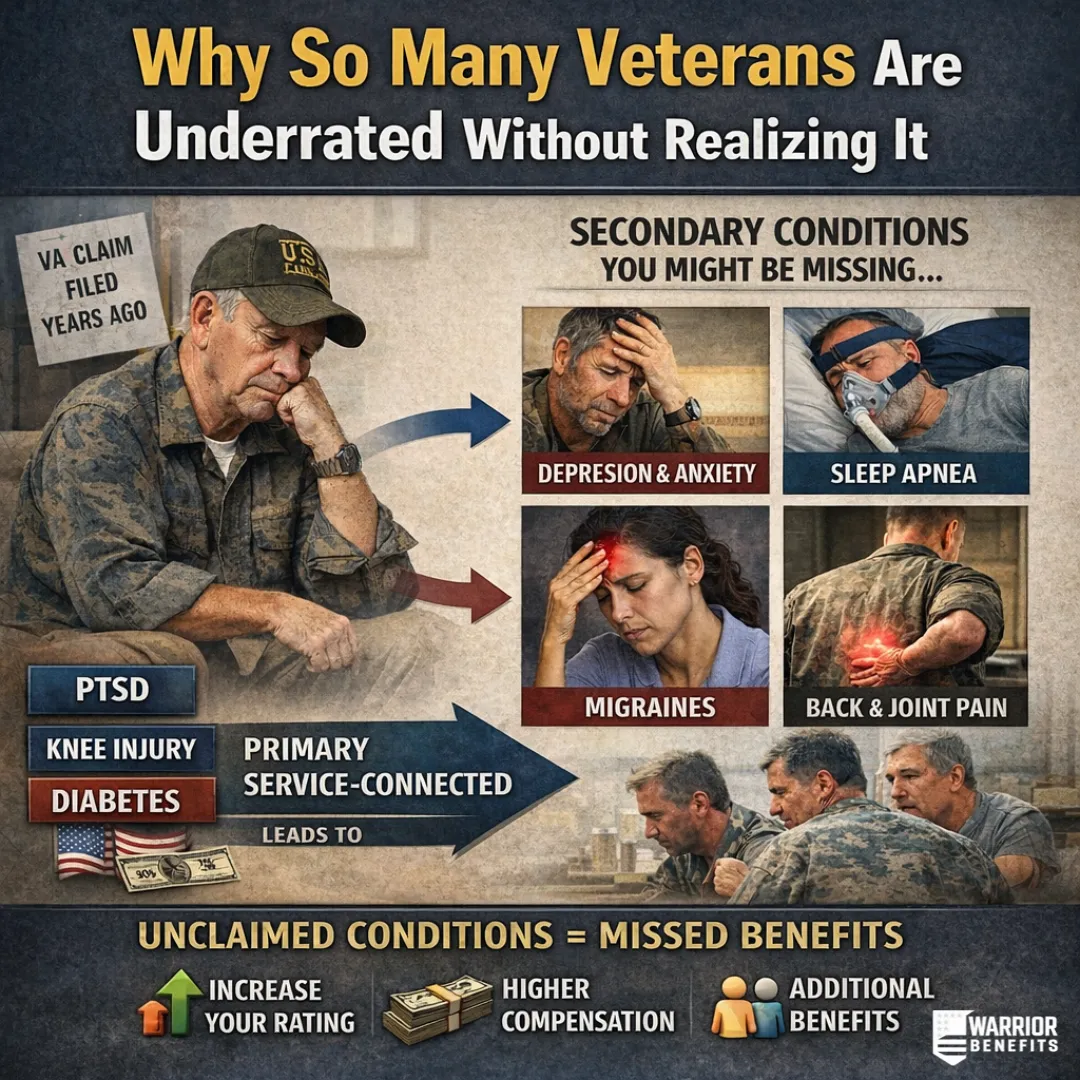
Secondary Conditions: The Hidden VA Ratings Most Veterans Never Claim
Why So Many Veterans Are Underrated Without Realizing It
One of the most common conversations we have at Warrior Benefits starts like this:
“I already filed my VA claim years ago.”
What many veterans don’t realize is that VA disability benefits don’t stop with the first condition you file. In fact, some of the most impactful ratings come from conditions that develop after service — as a result of other service-connected disabilities.
These are called secondary conditions, and they are one of the biggest reasons veterans remain underrated for years.
What Is a Secondary VA Disability Condition?
A secondary condition is a medical condition that is caused by or aggravated by an already service-connected disability.
In simple terms:
The primary condition is connected to service
The secondary condition exists because of the primary condition
If not for the original service-connected disability, the secondary condition would not exist — or would be significantly less severe.
The VA recognizes secondary conditions under the law, but they are never added automatically. If you don’t claim them, the VA doesn’t rate them.
Why Secondary Conditions Matter So Much
Secondary conditions can:
Increase your overall VA rating
Push you over key rating thresholds (30%, 50%, 70%, 100%)
Unlock additional benefits for healthcare and dependents
More accurately reflect how service affects your daily life
In many cases, the secondary condition is more disabling than the original injury.
Common Secondary Conditions Veterans Miss
Here are some of the most frequently overlooked secondary claims:
Chronic Pain → Mental Health Conditions
Long-term pain often leads to:
Depression
Anxiety
Sleep disorders
Irritability and isolation
Veterans are often treated for these symptoms but never connect them to the original injury.
PTSD → Sleep Apnea, Migraines, GERD
PTSD and other mental health conditions are commonly linked to:
Sleep apnea
Chronic migraines
Gastrointestinal issues
Bruxism (teeth grinding)
These conditions often develop years later, which causes veterans to assume they aren’t claimable.
Orthopedic Injuries → Joint & Spine Problems
A service-connected knee, ankle, or hip condition can cause:
Altered gait
Back pain
Opposite-side joint damage
Early arthritis
The VA does not automatically connect these dots — even if medical records clearly show progression.
Medication Side Effects
Long-term use of medications for service-connected conditions can lead to:
GERD
Liver or kidney issues
Weight gain
Erectile dysfunction
These are legitimate secondary conditions when properly documented.
Why Veterans Almost Always Miss Secondary Claims
Secondary claims are missed for a few predictable reasons:
1. Veterans Assume the VA Will Add Them Automatically
It won’t. The VA only rates conditions that are formally claimed.
2. Symptoms Develop Slowly
Secondary conditions often appear gradually, making them feel like “normal aging” instead of compensable disabilities.
3. Doctors Treat — But Don’t Explain
Medical providers focus on treatment, not VA claims. They rarely document causation unless asked directly.
4. Veterans Don’t Want to “Rock the Boat”
Many veterans worry that filing additional claims could jeopardize their current rating. In reality, properly filed secondary claims are common and expected.
What the VA Requires for Secondary Claims
To approve a secondary condition, the VA still needs three things:
A current diagnosis of the secondary condition
An existing service-connected primary condition
A medical nexus explaining how the primary condition caused or aggravated the secondary condition
This nexus is the most important — and most misunderstood — part.
Why Secondary Claims Fail
Secondary claims are often denied because:
The relationship isn’t clearly explained
Medical records list conditions separately without connection
Veterans assume the link is “obvious”
No medical opinion ties the conditions together
The VA does not infer relationships. If it’s not spelled out, it often doesn’t exist in their decision-making.
Secondary Claims and VA Math
Secondary conditions also matter because of how VA math works.
Even a “small” secondary rating can:
Increase combined ratings more than expected
Push veterans into higher compensation brackets
Qualify veterans for additional programs
This is why reviewing secondary conditions is one of the fastest ways to identify missed benefits.
When You Should Revisit Secondary Conditions
You should strongly consider a review if:
You were rated years ago
Your condition has worsened
You’ve developed new diagnoses since your original claim
You’re receiving treatment for conditions not currently rated
Your daily functioning has declined
Secondary claims are not limited by time since discharge.
Strategy Matters More Than Volume
Successful secondary claims are:
Focused
Clearly explained
Medically supported
Consistent with existing records
Submitting more paperwork without strategy often leads to confusion and delay.
How Secondary Conditions Fit Into a Smart VA Strategy
At Warrior Benefits, secondary conditions are often where the biggest gaps appear. Veterans come in rated at 30% or 50% and leave understanding how their full medical picture was never captured.
Secondary claims are not about exaggeration — they are about accuracy.
Final Thoughts: The VA Won’t Rate What You Don’t Claim
The VA system does not reward assumptions. It rewards clarity.
If you are living with medical conditions that exist because of your service-connected disabilities, you may already qualify for additional compensation — even if no one ever told you.
Many veterans are not underrated because they lack qualifying conditions. They’re underrated because no one showed them how secondary claims work.
Find Out What You’re Missing
You may already qualify for more than you think.
Contact Warrior Benefits to review your service-connected conditions and identify secondary claims that may increase your VA benefits.
You earned the rating — now make sure it reflects the whole picture.