

MLK Day Reflection: Advocacy, Service, and Standing Up for Your VA Benefits
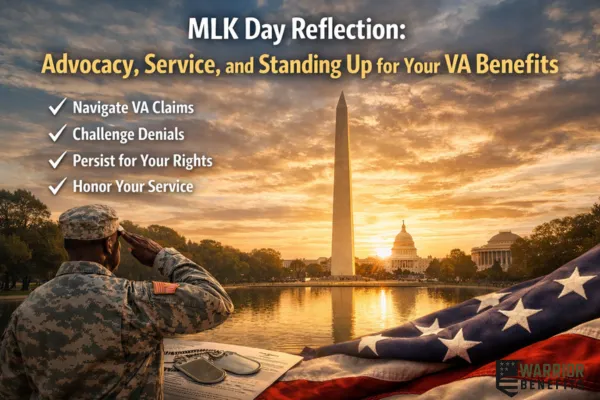
MLK Day Reflection: Advocacy, Service, and Standing Up for Your VA Benefits
Martin Luther King Jr. Day is more than a day off or a historical marker on the calendar. It is a moment to reflect on service, justice, and the responsibility to speak up when systems fall short of their promises.
Dr. King reminded the nation that progress does not happen passively. It requires courage, persistence, and the willingness to challenge systems that fail the people they are meant to serve. For veterans, that lesson does not end when the uniform comes off. In many ways, it simply changes form.
Advocacy—especially when it comes to VA benefits—is part of the mission.
Advocacy Is Part of the Mission
Dr. King believed that meaningful change required action, not silence. He understood that systems rarely correct themselves without pressure from the people they affect.
For veterans, advocacy often shows up in an unexpected place: navigating the VA benefits system.
Filing claims, responding to denials, and appealing decisions can feel overwhelming, impersonal, and frustrating. Many veterans expect the system to work smoothly because they fulfilled their end of the contract through service. When it doesn’t, the instinct is often to step back rather than push forward.
But advocacy is not a departure from military values—it’s an extension of them. Speaking up, documenting facts, and holding systems accountable are skills veterans used throughout their service. After discharge, those same skills are needed to ensure benefits are applied fairly and accurately.
Why Veterans Hesitate to Push Back
Despite having earned their benefits, many veterans hesitate to advocate for themselves. Common reasons include:
A desire not to feel entitled or “ask for too much”
Belief that other veterans may be more deserving
Burnout from confusing paperwork and long wait times
Frustration after an initial denial
The assumption that a denial is final
These feelings are understandable. Military culture emphasizes resilience, self-reliance, and pushing through without complaint. Unfortunately, those same values can work against veterans in a benefits system that requires clear documentation, follow-up, and persistence.
Advocacy is not entitlement. It is accountability. VA benefits are not favors or handouts—they are earned compensation for service-connected conditions.
Understanding What VA Denials Really Mean
One of the biggest misconceptions about VA claims is that a denial means the veteran was wrong to file. In reality, most denials are procedural, not personal.
A denial often means:
Medical evidence was missing or incomplete
The connection between service and the condition was not clearly explained
A condition was documented but not properly linked to military service
The claim was not fully developed at the time of review
In many cases, the VA is not saying “no forever.” It is saying, “We need more information.”
Understanding the reason for a denial is critical. With the right evidence, medical opinions, and strategy, many denied claims can be successfully appealed or refiled.
Persistence Is a Veteran Skill
Veterans already possess the tools needed to navigate the VA system—they just aren’t always told how to apply them in this context.
Those tools include:
Discipline to follow deadlines and procedures
Attention to detail when gathering records and evidence
Follow-through when claims stall or require additional action
Resilience when the process becomes slow or discouraging
The difference between a denied claim and a successful one is often not eligibility—it’s persistence paired with strategy.
Advocacy means knowing when to ask questions, when to submit additional evidence, and when to challenge a decision that doesn’t align with the facts.
Honoring Service Through Action
Advocating for your VA benefits does not diminish your service—it honors it.
Dr. King taught that justice requires participation. Accepting incomplete answers or walking away from earned benefits does not serve veterans, their families, or the system itself. When veterans advocate for themselves, they also help improve accountability and fairness for others navigating the same process.
MLK Day is a reminder that progress comes from refusing to accept less than what is right. For veterans, that includes standing up for the benefits promised in exchange for service.
Advocacy starts with understanding.
If you’re unsure why your claim was denied, what your options are, or how to move forward, you don’t have to navigate it alone.
Connect with Warrior Benefits to learn your options, understand your rights, and take the next step with confidence.
Your service mattered. Your voice still does.