


Intent to File Explained: The Easiest Way to Protect Back Pay
Why the Intent to File Deserves More Attention Than It Gets
If there is one step in the VA disability claims process that consistently costs veterans money when misunderstood—or ignored—it’s the Intent to File.
Every year, veterans lose months or even years of back pay not because they don’t qualify for benefits, but because they waited too long to formally tell the VA they intended to file a claim. The Intent to File exists to prevent exactly that—but only if you use it correctly.
At Warrior Benefits, we regularly work with veterans who say, “I wish I had known this sooner.” This article is designed to make sure you don’t say the same thing.
What an Intent to File Actually Is
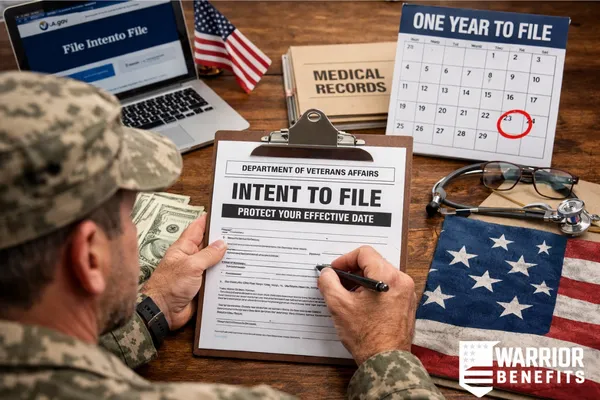
An Intent to File is a formal notification to the U.S. Department of Veterans Affairs that you plan to submit a VA disability claim in the future.
It does four critical things:
Establishes a potential effective date for your claim
Protects your back pay if the claim is approved
Gives you up to 12 months to file the full claim
Requires no medical evidence upfront
It is not a claim. It is not a diagnosis. It is a timeline protection tool.
Why Back Pay Matters More Than Veterans Realize
VA disability compensation is paid retroactively based on the effective date of your claim—not the date the VA makes a decision.
That means:
File earlier → more potential back pay
File later → benefits start later, even if the condition existed for years
For many veterans, this difference can equal:
Thousands of dollars
Financial breathing room
Stability during a long claims process
Once time is lost, it usually cannot be recovered.
What an Intent to File Does Not Do
To avoid confusion, it’s important to understand what an Intent to File does not do:
❌ It does not guarantee approval
❌ It does not lock in a rating percentage
❌ It does not require you to rush your claim
❌ It does not replace evidence
Instead, it buys you time and flexibility—two things the VA process rarely offers.
When Filing an Intent to File Makes Sense
An Intent to File is a smart move in almost any of the following situations:
1. You’re Considering a New Claim
If you think you may qualify—but aren’t sure yet—file the Intent to File first. You can sort out the details later without losing time.
2. You Suspect You’re Underrated
If your condition has worsened or your rating doesn’t reflect your reality, filing early protects your effective date while you gather updated evidence.
3. You’re Planning an Appeal or Supplemental Claim
If you intend to challenge a denial or submit new evidence, timing still matters.
4. You’re Waiting on Appointments or Records
Many veterans delay filing because they’re waiting on doctors, records, or test results. An Intent to File allows you to wait without penalty.
Why Veterans Skip This Step (And Why It’s Costly)
Despite its importance, many veterans never file an Intent to File. Common reasons include:
Wanting a “perfect” claim first
Believing evidence must come before filing
Not knowing the form exists
Assuming the VA will backdate automatically
Unfortunately, the VA does not backdate claims based on good intentions or long-standing symptoms. Only formal action protects your timeline.
How to File an Intent to File
Veterans can submit an Intent to File in three main ways:
Online through VA.gov
By phone with the VA
By submitting the appropriate VA form
Once submitted, the clock starts. You have one year to file the complete claim.
Common Mistakes to Avoid
Even with an Intent to File, veterans can still make costly errors:
Letting the one-year window expire
Forgetting to file the full claim
Filing the wrong type of follow-up claim
Assuming the VA will remind you
The VA will not track your deadlines for you. Strategy and follow-through matter.
Strategy Beats Speed Every Time
An Intent to File allows veterans to slow down and do things right. The strongest claims are rarely rushed—they’re planned.
Veterans who use this step effectively:
Protect back pay
Reduce stress
Avoid unnecessary denials
Maintain control of their timeline
It’s one of the simplest actions with the biggest long-term impact.
How Intent to File Fits Into a Bigger Claim Strategy
At Warrior Benefits, the Intent to File is often the first strategic step, not the last. It creates room to:
Review prior denials
Identify secondary conditions
Prepare for C&P exams
Gather meaningful evidence instead of piles of paperwork
Used correctly, it turns the VA process from reactive to proactive.
Final Thoughts: One Small Step, Big Consequences
The VA system rewards veterans who understand timing. The Intent to File exists because lawmakers recognized that gathering evidence takes time—and veterans shouldn’t be punished for being thorough.
Ignoring this step doesn’t make the process easier. It just makes it more expensive.
Protect Your Timeline Before You Do Anything Else
Don’t lose months of benefits to a simple delay.
Contact Warrior Benefits to understand how an Intent to File fits into your VA claim strategy and protect your effective date before moving forward.
Your service mattered. Your timing still does.